Oral PCSK9 Inhibitors
1. Oral PCSK9 inhibitors primarily reduce LDL cholesterol by:
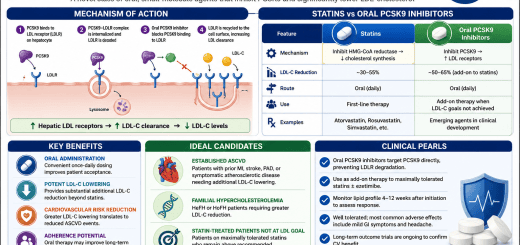
PCSK9 inhibition prevents LDL receptor degradation, allowing receptor recycling and enhanced LDL clearance from plasma.
2. Which protein is the molecular target of oral PCSK9 inhibitors?
The drug directly inhibits PCSK9, preventing LDL receptor degradation.
3. The major site of action of oral PCSK9 inhibitors is:
Hepatocytes contain LDL receptors responsible for LDL cholesterol clearance.
4. Compared with monoclonal antibody PCSK9 inhibitors, oral PCSK9 inhibitors are:
Oral PCSK9 inhibitors are small molecules taken by mouth rather than injectable biologics.
5. The principal lipid affected by oral PCSK9 inhibitors is:
The major therapeutic effect is a marked reduction in LDL cholesterol.
6. Oral PCSK9 inhibitors lower LDL cholesterol primarily by increasing:
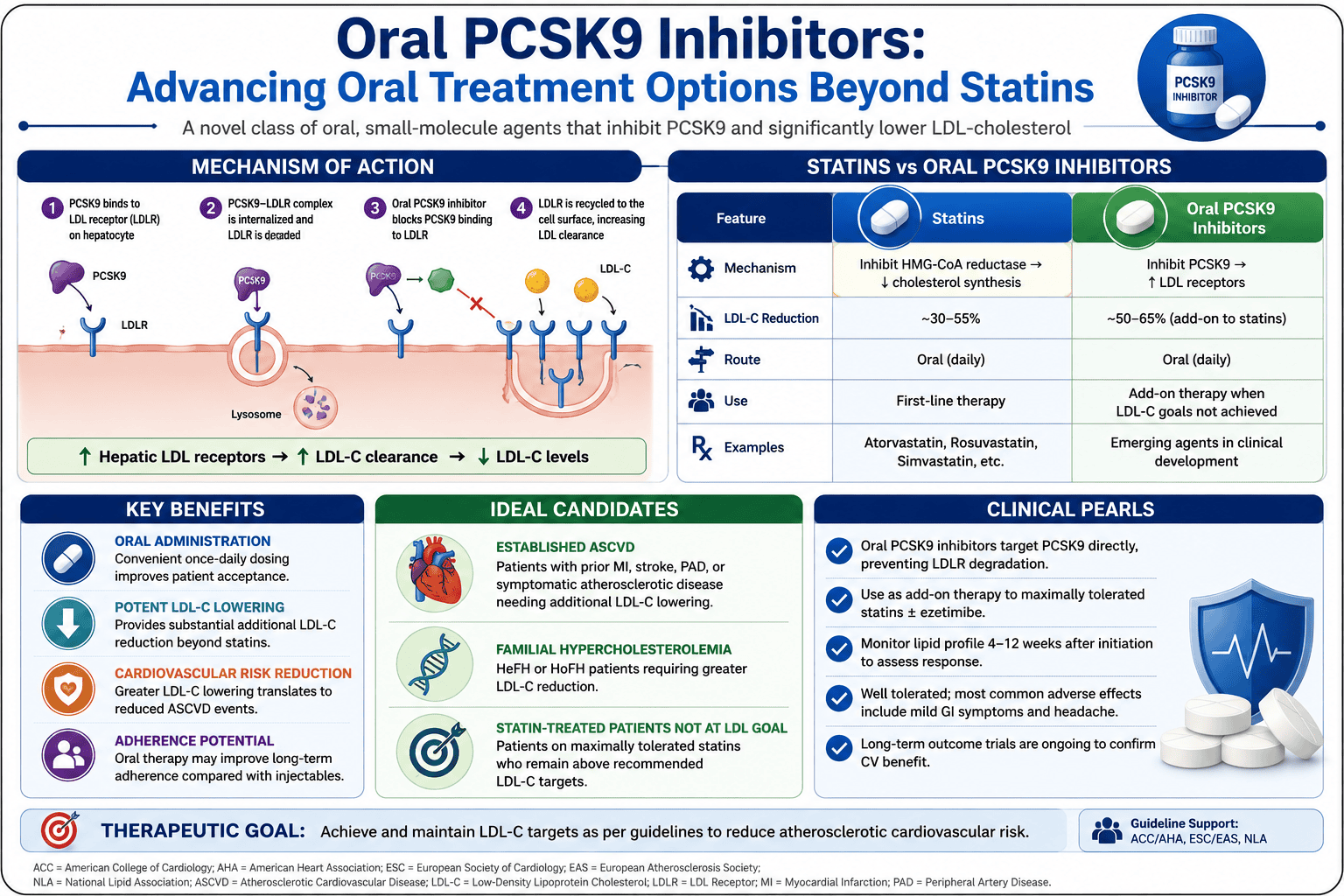
PCSK9 promotes degradation of LDL receptors. Oral PCSK9 inhibitors preserve LDL receptors on hepatocytes, increasing LDL clearance from the bloodstream.
7. Which patient is the best candidate for an oral PCSK9 inhibitor?
Patients with ASCVD or familial hypercholesterolemia whose LDL-C remains above target despite maximally tolerated statins are appropriate candidates for additional PCSK9 inhibition.
8. Oral PCSK9 inhibitors are most commonly used in combination with:
Current lipid management strategies recommend oral PCSK9 inhibitors as add-on therapy to maximally tolerated statins when additional LDL-C reduction is required.
9. The primary therapeutic goal of oral PCSK9 inhibitor therapy is:
By substantially lowering LDL cholesterol, oral PCSK9 inhibitors aim to reduce the risk of myocardial infarction, stroke, and other atherosclerotic cardiovascular events.
10. Which statement is a major potential advantage of oral PCSK9 inhibitors compared with injectable PCSK9 monoclonal antibodies?
A key advantage of oral PCSK9 inhibitors is their convenient oral administration, which may improve patient acceptance and long-term adherence compared with injectable therapies.
30 Important Points on Oral PCSK9 Inhibitors (Review Article Summary)
- PCSK9 (Proprotein Convertase Subtilisin/Kexin Type 9) regulates hepatic LDL receptor degradation.
- Increased PCSK9 activity reduces LDL receptor availability, resulting in elevated LDL-cholesterol (LDL-C).
- Oral PCSK9 inhibitors are a new class of small-molecule lipid-lowering agents designed to inhibit PCSK9.
- Unlike monoclonal antibodies, oral PCSK9 inhibitors are administered by mouth, improving convenience.
- Their principal mechanism is preventing PCSK9-mediated LDL receptor degradation.
- Increased recycling of LDL receptors enhances hepatic clearance of circulating LDL-C.
- Oral PCSK9 inhibitors produce substantial reductions in LDL-C when added to statin therapy.
- They are intended primarily as add-on therapy for patients who do not achieve LDL-C targets with statins.
- Patients with atherosclerotic cardiovascular disease (ASCVD) are major candidates.
- Individuals with heterozygous familial hypercholesterolemia (HeFH) may derive significant benefit.
- Oral therapy may improve patient adherence compared with injectable agents.
- Oral administration eliminates the need for self-injection.
- Daily dosing may enhance long-term treatment persistence.
- Oral PCSK9 inhibitors do not inhibit HMG-CoA reductase, unlike statins.
- They complement statin therapy by targeting a different biological pathway.
- Combination therapy with high-intensity statins ± ezetimibe provides greater LDL-C reduction.
- LDL-C lowering remains the primary therapeutic objective.
- Greater LDL-C reduction is associated with lower cardiovascular event rates.
- Early clinical trials have demonstrated good tolerability.
- Common adverse effects reported have generally been mild gastrointestinal symptoms.
- Significant hepatic or muscle toxicity has not been a dominant safety concern in early studies.
- Long-term cardiovascular outcome trials are still ongoing.
- MK-0616 is the leading investigational oral PCSK9 inhibitor.
- Early studies demonstrate LDL-C reductions approaching those achieved with injectable PCSK9 inhibitors when combined with statins.
- Oral PCSK9 inhibitors may become an important option for patients reluctant to receive injections.
- They may reduce treatment gaps in high-risk patients requiring intensive lipid lowering.
- Lipid profiles should be reassessed 4–12 weeks after initiation or dose modification.
- Lifestyle modification—including diet, exercise, smoking cessation, and weight management—remains essential alongside pharmacotherapy.
- Current international lipid guidelines emphasize achieving LDL-C targets using combination lipid-lowering therapy in very-high-risk patients.
- Oral PCSK9 inhibitors represent one of the most promising recent advances in lipid management and have the potential to expand treatment options for patients with persistent hypercholesterolemia, pending confirmation from ongoing phase 3 trials and cardiovascular outcome studies.
Oral PCSK9 Inhibitors: The Future of Cholesterol Management
Mechanism, Clinical Evidence, Indications, Advantages, and Future Perspectives
Focus Keyphrase: Oral PCSK9 Inhibitors
SEO Title: Oral PCSK9 Inhibitors: Complete DM Cardiology Guide with Mechanism, Clinical Trials & Future Applications
Meta Description (160 characters)
Learn everything about Oral PCSK9 inhibitors including mechanism, pharmacology, clinical trials, LDL reduction, indications, advantages, limitations and future applications.
Introduction
Hypercholesterolemia remains one of the most important modifiable cardiovascular risk factors worldwide. Although statins remain the cornerstone of lipid-lowering therapy, many patients either fail to achieve guideline-recommended LDL cholesterol targets or are unable to tolerate adequate statin doses.
The development of PCSK9 inhibition revolutionized lipid management with monoclonal antibodies such as alirocumab and evolocumab, followed by the small interfering RNA (siRNA) agent inclisiran. However, injectable therapies may reduce patient acceptance and adherence.
The emergence of oral PCSK9 inhibitors represents the next major advancement in preventive cardiology, offering potent LDL cholesterol reduction through a convenient oral route.
What is PCSK9?
Proprotein Convertase Subtilisin/Kexin Type 9 (PCSK9) is a serine protease synthesized primarily in the liver.
Its physiological role is to regulate LDL receptor recycling.
Normally,
- LDL receptor binds LDL particles
- LDL is internalized
- LDL receptor is recycled back to the hepatocyte surface
PCSK9 binds LDL receptors and directs them toward lysosomal degradation.
Result:
- Fewer LDL receptors
- Reduced hepatic LDL clearance
- Higher plasma LDL cholesterol
Blocking PCSK9 increases LDL receptor recycling and dramatically lowers LDL cholesterol.
Types of PCSK9 Inhibitors
| Therapy | Route | Mechanism |
|---|---|---|
| Evolocumab | Injection | Monoclonal antibody |
| Alirocumab | Injection | Monoclonal antibody |
| Inclisiran | Injection | siRNA |
| Oral PCSK9 inhibitors | Oral | Small molecule inhibitor |
Why Oral PCSK9 Inhibitors?
Injectable therapies have several limitations.
These include
- Needle anxiety
- Reduced adherence
- Cost
- Cold-chain storage
- Hospital visits
An oral drug may significantly improve long-term compliance.
Mechanism of Oral PCSK9 Inhibitors
Unlike monoclonal antibodies that bind circulating PCSK9, oral inhibitors are designed as small molecules that inhibit intracellular or extracellular interactions of PCSK9 with LDL receptors.
The result remains identical:
✓ Increased LDL receptor recycling
✓ Enhanced LDL clearance
✓ Reduced LDL cholesterol
Current Oral PCSK9 Drug Under Development
MK-0616
The leading oral PCSK9 inhibitor currently under clinical development is MK-0616.
Developer:
Merck & Co.
MK-0616 is a macrocyclic peptide engineered to survive gastrointestinal digestion and reach systemic circulation.
Pharmacology
Drug class
Small peptide PCSK9 inhibitor
Administration
Once daily oral tablet
Absorption
Uses permeation-enhancing formulation
Protein binding
High
Elimination
Primarily proteolytic degradation
Clinical Trials
Phase II Trial
Published in The New England Journal of Medicine (2023)
Patients:
Adults with hypercholesterolemia receiving statins
Results
LDL reduction:
≈60%
Additional findings
- Well tolerated
- Excellent safety profile
- Minimal serious adverse events
Phase III Trials
Large cardiovascular outcome trials are ongoing.
Expected endpoints include
- Myocardial infarction
- Stroke
- Cardiovascular death
- Need for revascularization
Expected Clinical Indications
Patients with
- Familial hypercholesterolemia
- Established ASCVD
- Statin intolerance
- Very high cardiovascular risk
- Diabetes with ASCVD
- Recurrent myocardial infarction
- Persistent LDL >70 mg/dL despite maximal therapy
Advantages
1. Oral Administration
Improves patient acceptance.
2. Better Compliance
Patients generally prefer tablets over injections.
3. Potent LDL Reduction
Around 60% LDL reduction in early studies.
4. Combination Therapy
Can be combined with
- Statins
- Ezetimibe
- Bempedoic acid
5. Potential Cost Reduction
Manufacturing may eventually become less expensive than biologics.
Limitations
Current limitations include
- Long-term outcome data awaited
- Cost remains unknown
- Regulatory approval pending
- Need for adherence to daily dosing
Comparison of Lipid-Lowering Therapies
| Therapy | LDL Reduction |
|---|---|
| Moderate statin | 30–50% |
| High-intensity statin | 50–55% |
| Ezetimibe | 18–22% |
| Bempedoic acid | 18–25% |
| Evolocumab | 60% |
| Alirocumab | 60% |
| Inclisiran | 50% |
| Oral PCSK9 inhibitor (MK-0616) | ~60% |
Role in Current Lipid Guidelines
Current ESC and ACC recommendations advocate intensive LDL lowering for:
- Recent ACS
- Chronic coronary syndrome
- Peripheral artery disease
- Stroke
- Diabetes with ASCVD
Oral PCSK9 inhibitors may become an important second- or third-line option once approved.
Future Applications
Potential future use includes
- Primary prevention
- Familial hypercholesterolemia
- Polyvascular disease
- Stroke prevention
- Post-PCI patients
- Secondary prevention clinics
DM Cardiology Pearls
✔ PCSK9 promotes LDL receptor degradation.
✔ Inhibiting PCSK9 increases LDL receptor recycling.
✔ Oral PCSK9 inhibitors may achieve LDL reductions similar to injectable antibodies.
✔ MK-0616 is currently the leading oral PCSK9 inhibitor.
✔ Daily oral therapy may improve long-term adherence.
✔ Cardiovascular outcome trials are ongoing.
Frequently Asked Questions (FAQs)
What is an oral PCSK9 inhibitor?
An investigational oral medication designed to inhibit PCSK9 and increase LDL receptor recycling, thereby lowering LDL cholesterol.
Which oral PCSK9 inhibitor is the most advanced?
MK-0616 is currently the leading candidate in clinical development.
How much can LDL cholesterol be reduced?
Phase II studies have shown reductions of approximately 60%.
Can oral PCSK9 inhibitors replace statins?
No. They are expected to complement statins, especially in patients who do not reach LDL goals or cannot tolerate high-intensity statins.
Are oral PCSK9 inhibitors approved?
As of August 2026, they remain under clinical development, and regulatory approvals are pending in many regions.
Who may benefit the most?
Patients with familial hypercholesterolemia, established ASCVD, recurrent cardiovascular events, or persistent LDL elevation despite maximally tolerated lipid-lowering therapy.
MedicineQuestionBank.com
To strengthen understanding of lipid disorders and preventive cardiology, readers may also find these resources helpful:
- Lipid-Lowering Guidelines – https://medicinequestionbank.com/lipid-lowering-guidelines
- DAPT Score Explained – https://medicinequestionbank.com/dapt-score
- Cardiac Biomarkers – https://medicinequestionbank.com/cardiac-biomarkers
- Coronary Artery Disease MCQs – https://medicinequestionbank.com/coronary-artery-disease-mcqs
- Familial Hypercholesterolemia – https://medicinequestionbank.com/familial-hypercholesterolemia
- Acute Coronary Syndrome – https://medicinequestionbank.com/acute-coronary-syndrome
- Preventive Cardiology Question Bank – https://medicinequestionbank.com
Suggested External References
- European Society of Cardiology (ESC) Dyslipidaemia Guidelines
- American College of Cardiology (ACC) Expert Consensus on Non-Statin Therapies
- American Heart Association (AHA) Scientific Statements
- National Lipid Association (NLA) Clinical Guidance
- Merck clinical development updates on MK-0616
Reference Index
- Libby P, et al. Braunwald’s Heart Disease. 13th Edition.
- Harrison’s Principles of Internal Medicine. 22nd Edition.
- 2023 AHA/ACC Guideline for the Management of Chronic Coronary Disease.
- 2022 ACC Expert Consensus Decision Pathway on Nonstatin Therapies.
- 2021 ESC Guidelines on Cardiovascular Disease Prevention.
- 2019 ESC/EAS Guidelines for the Management of Dyslipidaemias.
- Ballantyne CM, et al. Phase 2 Trial of MK-0616, an Oral PCSK9 Inhibitor. New England Journal of Medicine. 2023.
- Sabatine MS, et al. FOURIER Trial. New England Journal of Medicine. 2017.
- Schwartz GG, et al. ODYSSEY OUTCOMES Trial. New England Journal of Medicine. 2018.
- Ray KK, et al. Inclisiran and LDL Cholesterol Lowering. New England Journal of Medicine. 2020.
- National Lipid Association Clinical Recommendations.
- American Heart Association Lipid Management Scientific Statements.
- Merck. Clinical development information for MK-0616.
- European Atherosclerosis Society Consensus Statements.
- Goodman & Gilman’s The Pharmacological Basis of Therapeutics, 14th Edition.
Oral PCSK9 inhibitor, MK-0616, PCSK9 inhibitors, LDL cholesterol lowering, hypercholesterolemia treatment, dyslipidemia, ASCVD prevention, preventive cardiology, familial hypercholesterolemia, statin intolerance, DM Cardiology notes, NEET SS Cardiology, lipid management, oral lipid-lowering therapy, PCSK9 mechanism, cardiovascular prevention.