β blockers for aortic regurgitation
β blockers for aortic regurgitation
β-Blockers in Aortic Regurgitation (AR)
Bottom line:
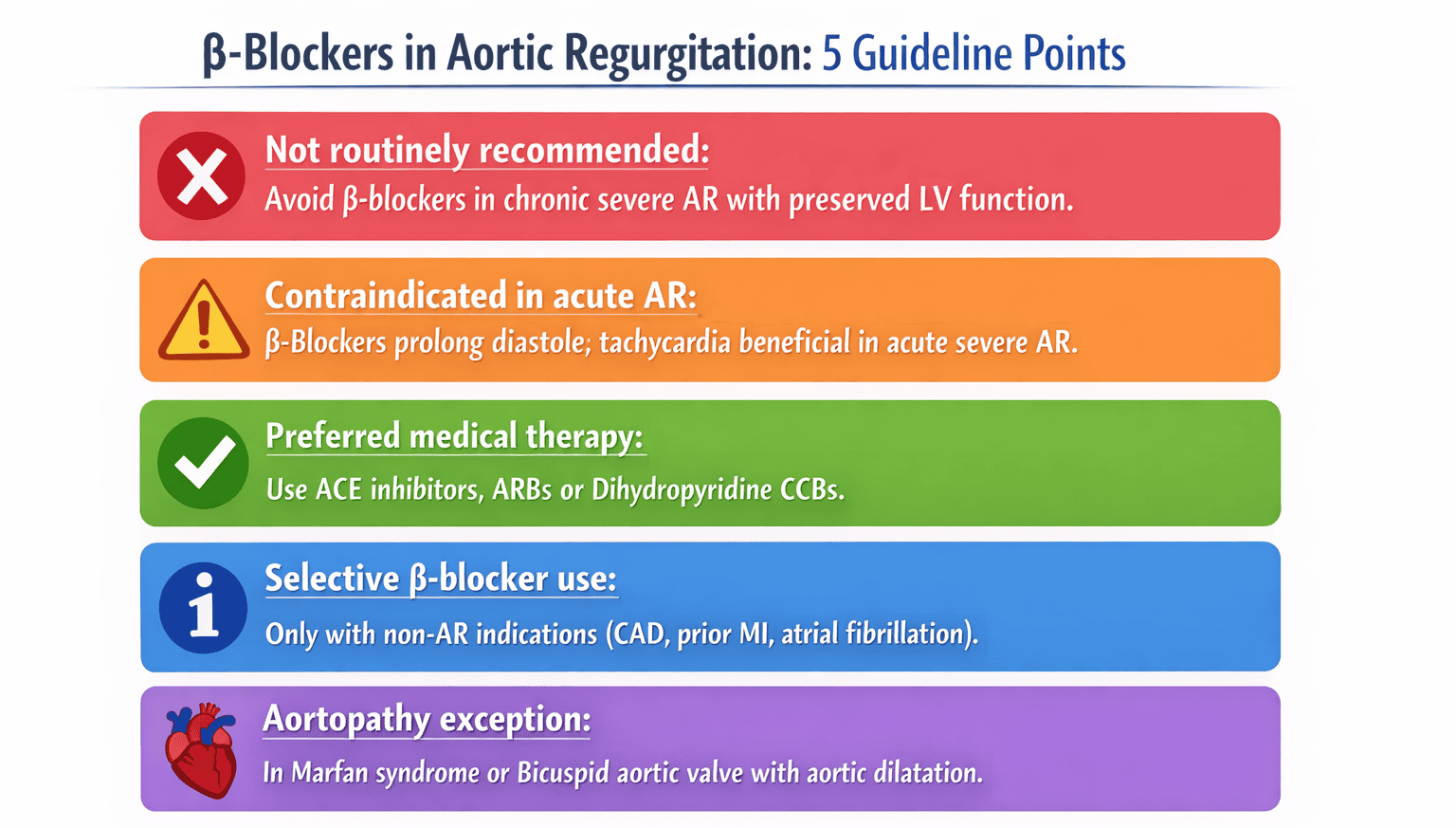
β-blockers are generally avoided in chronic severe aortic regurgitation, particularly when the patient is asymptomatic or has preserved left ventricular (LV) function.
Pathophysiological rationale
- AR severity is time-dependent.
- β-blockers prolong diastole by reducing heart rate.
- Longer diastolic duration → increased regurgitant volume → higher LV volume overload.
- This may worsen LV dilatation and dysfunction over time.
Chronic Aortic Regurgitation
Not routinely recommended, especially in:
- Severe AR
- Normal sinus rhythm
- Preserved LV systolic function
Preferred agents for afterload reduction:
- ACE inhibitors / ARBs
- Dihydropyridine calcium-channel blockers (e.g., nifedipine)
Situations where β-blockers may be used
β-blockers are not absolutely contraindicated and may be appropriate in selected contexts:
- Coexisting indications
- Hypertension (when other agents are insufficient)
- Coronary artery disease
- Prior myocardial infarction
- Arrhythmias requiring rate control (e.g., atrial fibrillation)
- Aortic root disease
- Marfan syndrome
- Bicuspid aortic valve with aortopathy
β-blockers may slow aortic root dilatation (benefit relates to the aorta, not AR itself).
- Acute severe AR (temporary use)
- Rare and controversial
- Usually avoided; tachycardia may actually be beneficial in acute AR
Acute Aortic Regurgitation
β-blockers are contraindicated
- Need short diastole to limit regurgitation
- Management favors:
- Vasodilators (e.g., nitroprusside)
- Inotropes if needed
- Urgent surgery
Guideline perspective (ESC / ACC-AHA aligned)
- No recommendation for routine β-blocker use in chronic AR
- Use only if another compelling indication exists
β-Blockers in Aortic Regurgitation — 20 High-Yield MCQs (SS / DM)