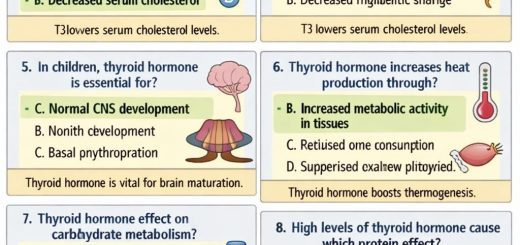
Thyroid hormone can cause which one of the following effects?
Thyroid hormone can cause which one of the following effects?
A- Hypoglycemia
B- Lowers blood cholesterol
C- Lowers body temperature
D- Lowers oxygen consumption
Thyroid hormone (T3/T4) has multiple systemic effects because it increases basal metabolic activity and sympathetic sensitivity.
Typical effects include:
- ↑ Basal metabolic rate (BMR) 🔥
- ↑ Oxygen consumption in tissues
- ↑ Heat production (calorigenic effect)
- ↑ Heart rate and cardiac output ❤️
- ↑ Sensitivity to catecholamines (β-adrenergic up-regulation)
- ↑ Lipolysis and fatty-acid oxidation
- ↑ Glucose absorption and gluconeogenesis
- ↓ Serum cholesterol (increased LDL receptor activity)
- ↑ Protein turnover (high levels → net protein catabolism)
- Essential for normal CNS development in children
Key Exam Pearl (MCQ)
A very commonly tested single effect is:
✅ Increase in basal metabolic rate (BMR)
Other frequently correct MCQ options include:
- Increase in heart rate
- Increase in heat production
- Decrease in serum cholesterol
1. Thyroid hormone primarily increases which of the following?
A. Basal metabolic rate
B. Plasma albumin synthesis
C. Bone mineral density
D. Insulin resistance
Thyroid hormones increase mitochondrial activity and Na⁺/K⁺ ATPase activity, raising basal metabolic rate.
2. Thyroid hormone increases cardiac output mainly by:
A. Decreasing heart rate
B. Increasing β-adrenergic receptor sensitivity
C. Reducing myocardial contractility
D. Increasing systemic vascular resistance
T3 up-regulates β-adrenergic receptors, making the heart more responsive to catecholamines.
3. A major metabolic effect of thyroid hormone is:
A. Reduced oxygen consumption
B. Decreased mitochondrial activity
C. Increased oxygen consumption in tissues
D. Suppression of ATP turnover
Thyroid hormone stimulates mitochondrial respiration leading to increased oxygen consumption.
4. Thyroid hormone typically causes which lipid effect?
A. Increased LDL cholesterol
B. Decreased serum cholesterol
C. Increased triglyceride storage
D. Decreased lipolysis
T3 increases LDL receptor expression and hepatic cholesterol metabolism, lowering serum cholesterol.
5. In children, thyroid hormone is essential for:
A. Hepatic detoxification
B. Pancreatic enzyme secretion
C. Normal CNS development
D. Renal erythropoietin secretion
Thyroid hormone is crucial for brain maturation and neuronal development during childhood.
6. Thyroid hormone increases heat production through:
A. Reduced mitochondrial respiration
B. Increased metabolic activity in tissues
C. Reduced ATP hydrolysis
D. Suppressed oxidative phosphorylation
Thyroid hormone stimulates metabolic processes leading to increased thermogenesis.
7. Thyroid hormone effect on carbohydrate metabolism includes:
A. Increased gluconeogenesis
B. Reduced intestinal glucose absorption
C. Decreased glycogenolysis
D. Suppressed insulin secretion
T3 stimulates hepatic gluconeogenesis and increases intestinal glucose absorption.
8. High levels of thyroid hormone cause which protein effect?
A. Protein accumulation
B. Net protein catabolism
C. Increased collagen storage
D. Reduced amino acid turnover
Excess thyroid hormone accelerates protein breakdown leading to muscle wasting.
9. Thyroid hormone effect on cardiovascular system includes:
A. Decreased stroke volume
B. Increased systemic vascular resistance
C. Increased heart rate
D. Reduced myocardial contractility
T3 increases heart rate and contractility through β-adrenergic receptor upregulation.
10. Thyroid hormone increases gastrointestinal activity by:
A. Decreasing gut motility
B. Reducing digestive enzymes
C. Increasing intestinal motility
D. Suppressing nutrient absorption
Hyperthyroidism often causes diarrhea due to increased intestinal motility.
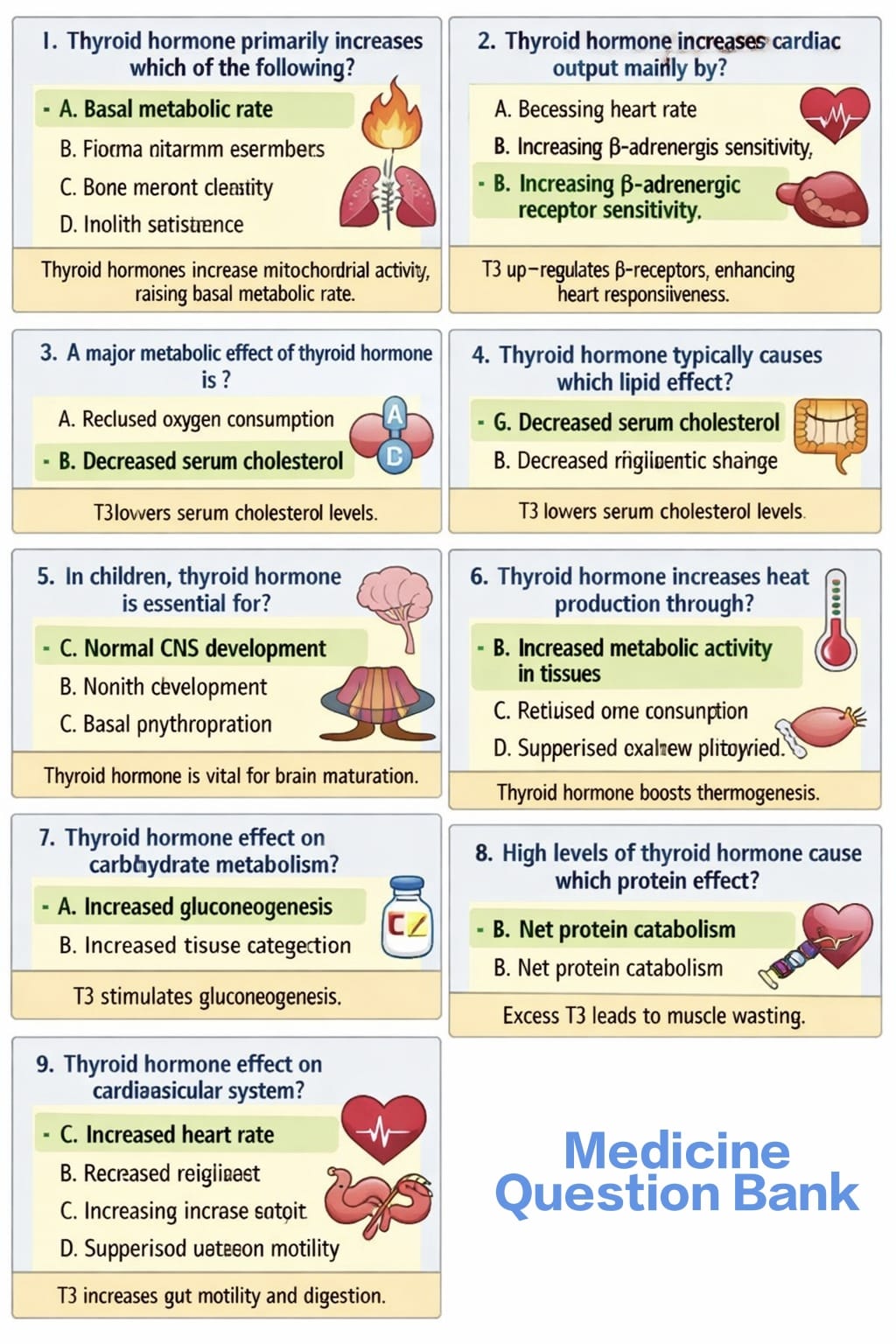
Basal metabolic rate ↑, Thermogenesis (heat production), Oxygen consumption ↑, Heart rate ↑, Cardiac output ↑, β-adrenergic receptor up-regulation, Gluconeogenesis ↑, Lipolysis & ↓ serum cholesterol, CNS development (children), Protein catabolism (excess T3/T4)